
Product guidance
Hidden Data Drains: How Unchecked IoT Devices Compromise Your Network
Learn how unchecked IoT endpoints drain network capacity and how carrier allocation data helps teams audit connected assets to reinforce IoT data security.
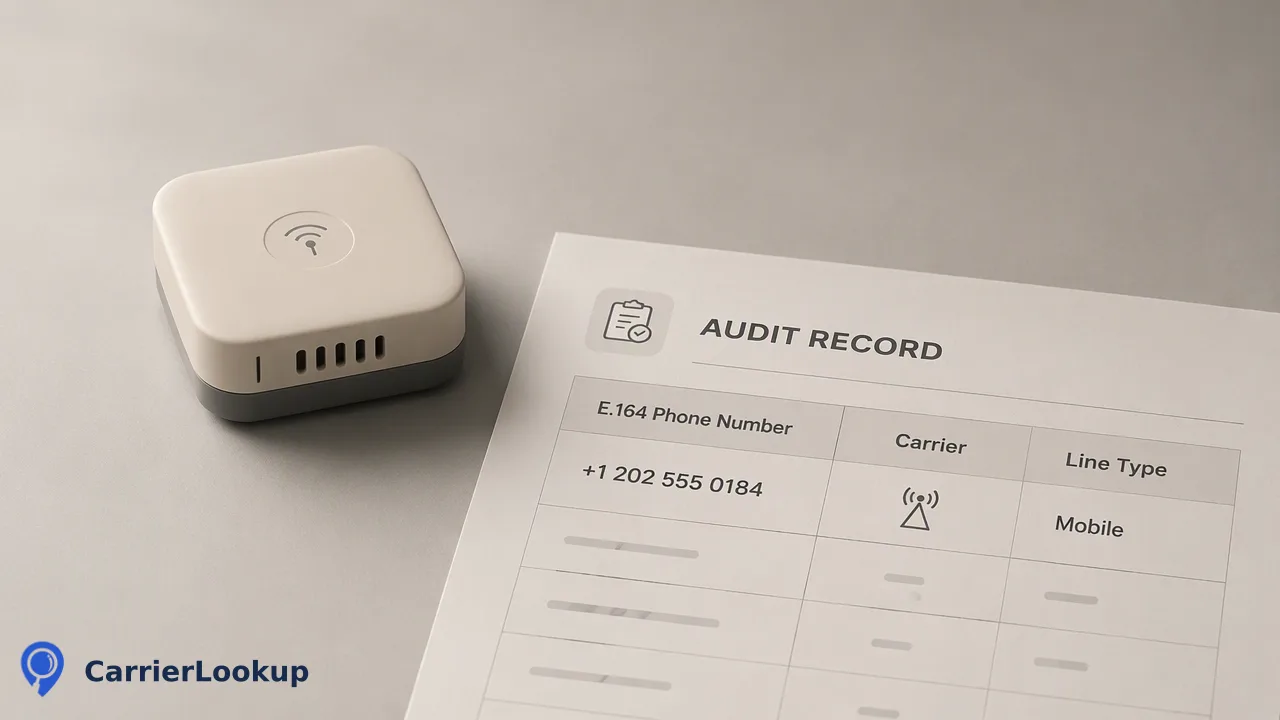
Unchecked IoT endpoints can overwhelm infrastructure with unexpected traffic. Establishing a verification-first audit workflow using original carrier and line-type allocation data helps organizations categorize cellular devices, isolate rogue transmissions, and improve IoT data security across connected fleets.
IoT data security requires total visibility into every endpoint communicating across an organization's infrastructure. When smart hardware operates without ongoing inventory controls, routine configuration flaws or firmware anomalies can cause catastrophic data drains. A recent report revealed an internet-connected coffee machine transmitting 1TB of traffic over 10 days, completely saturating a local access point. For enterprise environments managing extensive deployments, resolving these blind spots demands a verification-first policy. By auditing device identifiers against original carrier allocation and line-type records, engineering teams can systematically catalog mobile endpoints, reconcile active inventory with procurement baselines, and detect unauthorized cellular transmissions before they compromise network stability.
The Black Box Problem: When IoT Devices Overwhelm Networks
Connected smart devices frequently operate as unmonitored black boxes once connected to local or cellular networks. Because these endpoints often lack interactive user interfaces, technical anomalies can persist undetected for extended periods while silently consuming network bandwidth.
A documented example emerged when an IT specialist discovered that a smart coffee machine had generated 1TB of data within a span of 10 days. The massive volume saturated the local wireless access point, causing substantial degradation across the broader network. While investigation indicated the bulk of the packets circulated internally rather than escaping to the public internet, the incident demonstrates how rapidly a single malfunctioning appliance can consume shared capacity.
In industrial and commercial contexts, the operational consequences of unmanaged devices expand significantly. Facilities deploy hundreds of specialized sensors, environmental monitors, automated kiosks, and telemetry modules. When these appliances experience firmware loops or communication errors, the resulting data surges degrade bandwidth, impair business operations, and introduce unmonitored communication channels that complicate infrastructure governance.
Establishing Asset Visibility for Connected Fleets
Securing distributed hardware begins with comprehensive asset accounting. Technical teams cannot defend infrastructure against data drains when endpoints communicate without central cataloging. While many smart utilities connect through standard Wi-Fi, modern enterprise architecture increasingly incorporates cellular connectivity to support remote telemetry, logistics monitoring, and field automation.
Cellular endpoints introduce distinct governance challenges compared to traditional local network assets. When devices connect through mobile networks, physical access points no longer supply perimeter visibility. Administrators must rely on telecommunications identifiers to maintain oversight. Identifying the original carrier and assigned line type provides foundational context for verifying these endpoints. For example, international standards established by ITU-T Recommendation E.164 establish structured numbering formats that allow automated systems to extract country codes and assign operational classifications systematically.
Reviewing these records helps technical personnel distinguish mobile broadband lines, landlines, and specialized machine interfaces. This classification provides immediate insight when auditing communication logs against expected network configurations.
Implementing a Verification-First Audit Workflow
A robust audit workflow verifies device records against telecommunication numbering databases rather than assuming historical spreadsheets remain accurate. Organizations can structure their verification pipeline around consistent data ingestion, batch enrichment, and anomaly resolution.
Step 1: Identifier Standardization
Collect all cellular SIM phone numbers deployed across hardware endpoints. Format each record into standard international numbering structure with the applicable country code, preparing the dataset for automated lookup tools.
Step 2: Telecommunications Enrichment
Submit the sanitized identifier inventory to CarrierLookup using either synchronous check capabilities or asynchronous bulk batch processing. The lookup returns structured attributes including the original carrier, line type, country code, and initial allocation geography.
Step 3: Baseline Reconciliation
Compare the returned data attributes against your authorized procurement contracts:
| Attribute | Audit Purpose | Verification Action |
|---|---|---|
| Original Carrier | Supplier verification | Confirm line matches contracted mobile network operator |
| Line Type | Asset classification | Verify identifier is provisioned as mobile or machine line |
| Allocation Geography | Regulatory mapping | Check region against intended geographic deployment zone |
Discrepancies identified during reconciliation highlight misconfigured units, decommissioned sensors retaining active SIM connections, or unapproved communication modules that require prompt investigation.
Differentiating Number Allocation from Real-Time Telemetry
When integrating carrier intelligence into security auditing, technical teams must understand the precise scope of the data. CarrierLookup delivers the carrier to which the numbering block was originally allocated, alongside initial line-type designations and regional assignment boundaries.
These signals represent telecom provisioning metadata rather than real-time network states. Carrier lookup results do not indicate active device power, current signal strength, live GPS location, or continuous bandwidth consumption. An endpoint that has undergone local service porting, as commonly permitted under regulatory frameworks like the FCC Porting Rules, retains its original allocation history within these foundational records.
Treating carrier allocation data as an architectural baseline gives teams a clean, lightweight mechanism to maintain fleet inventories without collecting unnecessary surveillance telemetry. This aligns with data minimization principles outlined under GDPR Article 5, ensuring organizations verify cellular infrastructure legitimacy while keeping administrative data footprints concise and purposeful.
FAQ
Why is carrier allocation data useful for IoT fleet auditing?
Original carrier allocation details provide a neutral telecommunications baseline for cellular-connected endpoints. By verifying the assigned line type and original operating carrier for each subscriber identifier, administrators can cross-reference physical device registries against network procurement records. This baseline helps security teams isolate unrecognized mobile identifiers and spot discrepancies between planned deployments and actual connectivity configurations.
How do allocation geography fields differ from live location tracking?
Carrier lookup returns geographic data representing the region and city where a numbering block was initially assigned under standard telecommunication plans. These records describe regulatory allocation boundaries rather than real-time GPS positioning or active cell-tower connections. Systems evaluate these attributes to confirm whether numbering ranges match expected regional deployments.
How can teams audit large volumes of mobile IoT identifiers efficiently?
Organizations managing extensive fleets can utilize asynchronous bulk file processing to evaluate entire inventories of device numbers. By submitting a standardized file through a dedicated carrier lookup workflow, teams receive structured records containing line types and original carriers. This bulk reconciliation supports regular compliance checks and fleet-wide asset governance.
Learn More
Choose the product information that fits the next step in your workflow.