
Product guidance
Why US Phone Number Validation Requires Real-Time Portability Data
Learn why US phone number validation requires real-time portability data to navigate number porting, line types, and carrier allocation accurately.
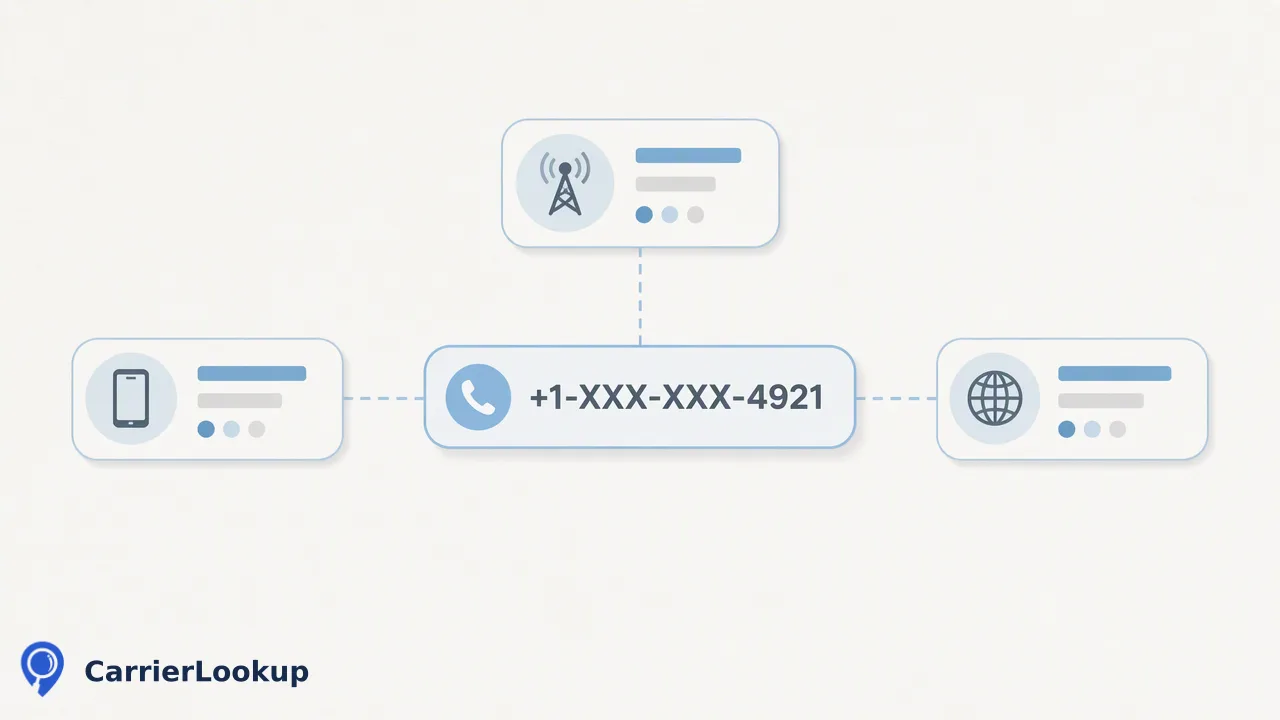
United States phone numbers frequently undergo porting, decoupling numbers from initial carrier assignments. Relying on static prefix tables causes routing errors, making real-time carrier and line-type metadata essential for routing logic and data hygiene.
In the United States, phone number validation requires real-time portability data because subscribers can change service providers while retaining their original numbers. Static routing logic and prefix-based databases rely on original exchange allocations that no longer reliably identify the network handling a number. Number portability decouples telephone numbers from their assigned network blocks. As a result, static tables introduce operational friction, routing failures, and misaligned delivery paths. Performing dynamic carrier lookups gives organizations accurate carrier allocation context, line-type classification, and administrative geography. This metadata helps teams inform routing rules, segment contact records, and support hygiene workflows without guessing carrier identities.
The Evolution of US Number Portability and Static Routing Limits
Telecommunications routing in the United States historically followed the North American Numbering Plan (NANP). Under this framework, a ten-digit telephone number consisted of a three-digit area code, a three-digit central office code (prefix), and a four-digit line number. Regulators allocated these blocks directly to specific local exchange carriers, meaning the prefix inherently revealed both the operating network and the local rate center. This predictable mapping changed permanently with the regulatory rollout of wireless Local Number Portability (LNP) in 2003. LNP granted consumers and businesses the legal right to retain their existing telephone numbers when moving between mobile providers, as well as when porting numbers between wireline and wireless networks. Decoupling the physical number from its underlying network infrastructure rendered static lookup tables obsolete. While a prefix database can indicate which carrier first received an allocation decades ago, it provides no visibility into subsequent porting events, leaving static routing systems prone to misdirection.
Assigned Carrier Allocation vs. Current Network Data
A common point of confusion in phone validation is the distinction between assigned carrier allocation and current network context. When organizations query telecommunication records, the resulting metadata reflects specific operational layers:
| Data Layer | Technical Focus | Operational Purpose |
|---|---|---|
| Original Allocation | Historical carrier and rate center assigned to the number prefix block | Identifies regulatory origin and initial market assignment |
| Current Carrier Context | Operating provider servicing the number following porting actions | Informs modern routing paths and gateway selection |
| Allocation Geography | Administrative city and region linked to the number's exchange code | Indicates numbering plan origin, not live device GPS location |
CarrierLookup returns available carrier, line-type, and allocation-geography fields for queried numbers. In synchronous lookups, fields like carrier, number_type, region, and city provide structured context. If a record returns registered=false, this denotes a normal no-allocation-data state rather than evidence that a number is disconnected or invalid. Recognizing these distinctions ensures engineering teams interpret carrier signals accurately without mistaking administrative geography for a subscriber's current physical whereabouts. |
The Role of Line Types in Telephony and Verification Strategy
Beyond identifying carrier brand names, determining the number's line type is a critical component of telephone validation. In the United States, phone numbers generally fall into three primary categories: Mobile, Landline (Wireline), and Voice over IP (VoIP). Because porting allows numbers to migrate across these functional categories—such as transferring a traditional residential landline to a cloud PBX or a mobile device—static format checks cannot reveal the actual line classification. Identifying whether an identifier is mobile, landline, or VoIP helps organizations tailor their verification and routing workflows. Similarly, virtual VoIP numbers often require distinct handling within customer onboarding workflows due to differing telecommunication routing protocols. Accessing real-time line-type metadata gives operations teams clear parameters to segment outbound traffic and select appropriate transmission channels.
Operationalizing Carrier Metadata for Routing and Data Hygiene
Integrating real-time carrier metadata into enterprise workflows supports routing optimization and database integrity. Rather than relying on rigid, outdated spreadsheets, technical teams can implement automated checks across their architectures. CarrierLookup supports single-record verification through its web dashboard, developer REST API, and MCP integrations, alongside batch handling capabilities. For real-time workflows, an API check using POST /api/v1/check evaluates an individual record synchronously, while POST /api/v1/batch-check handles between 1 and 100 identifiers in original input order. When teams need to update large databases, asynchronous tasks using the carrier_batch service type process lists ranging from 1,000 to 100,000 numbers within the same country before generating a downloadable export. Using these tools to periodically refresh carrier and line-type fields helps maintain pristine CRM records, informs gateway selection, and minimizes routing failures stemming from unmonitored carrier porting.
FAQ
Why is prefix-based routing unreliable for US phone numbers?
Prefix-based routing relies on the North American Numbering Plan's historic allocation tables, where specific area codes and central office codes belonged to dedicated carriers. Because mobile number portability has been active in the United States since 2003, subscribers routinely switch service providers while retaining their full numbers. Static prefix tables reflect only the initial network assignment, meaning they misidentify modern service providers and misguide downstream communication routing.
Does a carrier lookup confirm whether a phone number is currently reachable?
No. A carrier lookup returns administrative allocation context, including identified carrier names, line types, and geographic assignment fields. Teams should treat carrier metadata as operational categorization context rather than proof of live connectivity or platform account-presence signals status.
What is the difference between original allocation and current carrier status?
Original allocation represents the carrier and geographic rate center that first received a block of numbers from telecommunications regulators. Current carrier status reflects the provider presently servicing the line after potential porting events. While static databases capture only historical allocation records, real-time lookup queries return the updated carrier context necessary for informed routing and operational classification.
How does number portability impact CRM data hygiene?
Number portability gradually degrades static CRM records as contacts switch carriers over time or port landlines to mobile or voice-over-IP services. When systems assume fixed network paths or static line types, message routing rules and communication attempts fail. Periodic carrier lookups update line-type and carrier fields, helping data teams maintain structured, accurate telecommunication records across large databases.
Learn More
Choose the product information that fits the next step in your workflow.