
Product guidance
Designing Robust Phone Validation APIs: A Blueprint for Verification Systems
Architect phone validation APIs with carrier allocation data, line-type intelligence, and scalable workflows for identity verification.
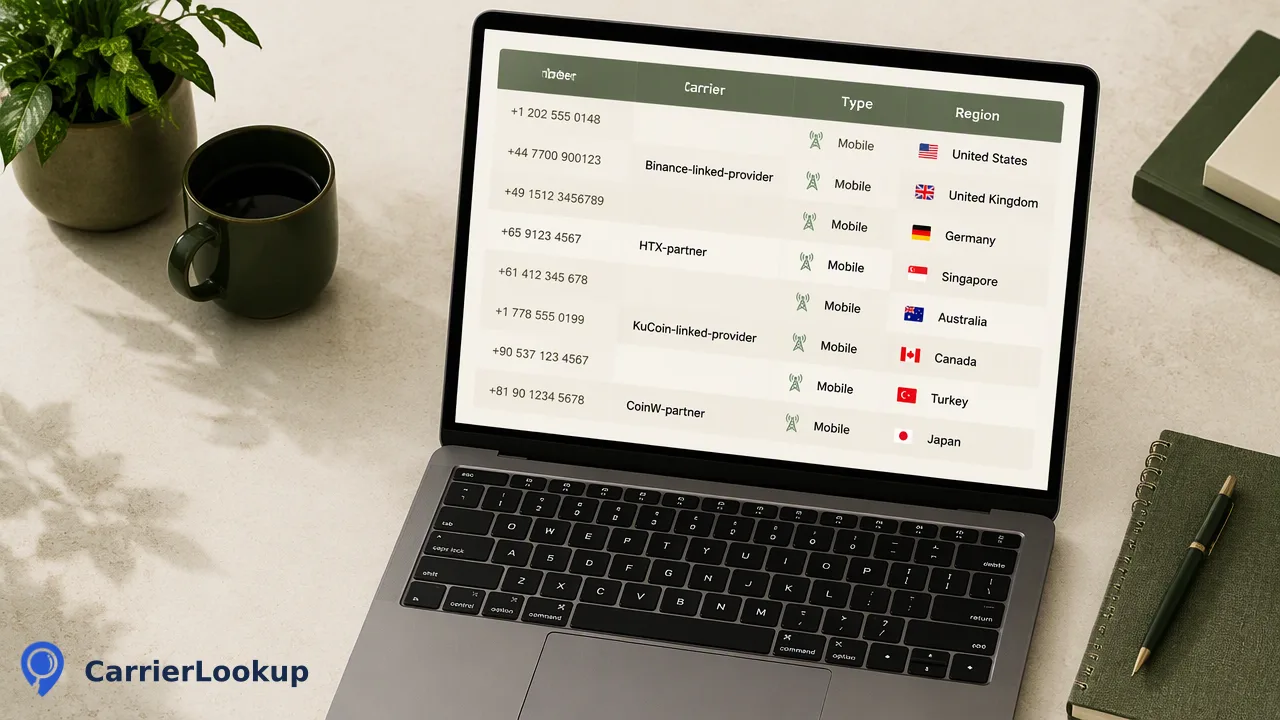
Learn how to architect phone validation APIs that move beyond static regex to leverage dynamic carrier allocation, line-type signals, and structured processing patterns.
Effective phone validation API design requires moving beyond static regex strings toward metadata-rich validation systems. Traditional regular expressions check string structures, but modern systems depend on dynamic allocation data to contextualize phone numbers. Building a reliable API architecture involves standardizing incoming numbers into the E.164 format, identifying carrier and line-type metadata, and handling edge cases like empty records gracefully. When APIs deliver structured allocation signals rather than basic boolean checks, downstream systems gain useful context for workflow routing, CRM hygiene, and onboarding reviews.
The Shift from Static Formatting to Dynamic Metadata Validation
A resilient phone validation architecture starts with a fundamental shift: phone numbers must be handled as structured data entities rather than basic alphanumeric strings. Simple formatting patterns, such as regular expressions, confirm string syntax but cannot identify line types, operational carriers, or regional allocations. The initial requirement in phone validation API design is global normalization using the international E.164 standard. Standardizing numbers to an E.164 format (such as +12065550100) eliminates country-specific prefix ambiguities, local trunk codes, and formatting variations. Once normalized, the number can be evaluated against dynamic allocation records rather than static tables. Because number portability allows subscribers to retain numbers across different service providers, static prefix lists quickly degrade in quality. Dynamic lookups return operational metadata that informs technical teams about network assignments, helping services direct communications efficiently.
Defining the Mission: Operational Routing and Workflow Review
API design must be driven by clear operational requirements. A single validation endpoint rarely serves every business scenario identically. Technical teams must structure their validation logic based on whether the primary goal is infrastructure routing, data hygiene, or onboarding review. For example, routing workflows require fast determination of whether an identifier is assigned to a wireless, landline, or VoIP carrier to prevent transmission failures in text-based workflows. In CRM data hygiene, validation models clean contact records by identifying historical assignment changes. Carrier and allocation signals give engineering pipelines reliable data to triage incoming records. Rather than making definitive reachability or identity assumptions, the API provides objective technical properties that downstream logic can evaluate according to distinct business rules.
Structuring Responses for Actionable Risk and Allocation Context
To deliver maximum value to downstream systems, phone validation APIs should provide comprehensive metadata attributes. Robust payloads return distinct fields including carrier, number_type, country_code, region, and city allocation data. | Attribute | Signal Type | Operational Purpose | | :--- | :--- | :--- | | carrier | Network Allocation | Informs routing pathways and carrier-specific logic | | number_type | Line Type | Distinguishes mobile, landline, and virtual allocations | | country_code | ISO Country | Confirms country assignment for routing standardization | | region / city | Administrative Geography | Identifies initial geographic block allocation | Engineering teams must note that region and city values indicate the administrative area where the telephone exchange was provisioned. They do not represent live device tracking, GPS coordinates, or real-time user location. Furthermore, fields that lack data return as empty strings. Recognizing these distinctions ensures that verification engines interpret API payloads accurately without creating false operational assumptions.
Balancing Synchronous Endpoints and Bulk Processing Architectures
API architects must choose the appropriate ingestion pattern based on throughput and timing requirements. Real-time workflows, such as user sign-ups or live customer interactions, require synchronous endpoints. A synchronous POST endpoint, such as POST /api/v1/check for single identifiers or POST /api/v1/batch-check for 1 to 100 numbers, processes records immediately in input order, returning carrier and line-type metadata directly in the response body. Conversely, large-scale database audits, CRM synchronization, and data cleaning tasks are unsuited for synchronous requests. High-volume operations benefit from asynchronous batch architectures. For instance, tasks processing 1,000 to 100,000 valid phone numbers from a single country can run as an asynchronous carrier_batch task, generating a downloadable output file once completed. Separating synchronous single-check lookups from asynchronous batch workflows protects API responsiveness and provides scalable data handling.
FAQ
Why is regex-based validation alone insufficient for modern applications?
Regular expressions only verify that a string conforms to expected numbering lengths and digit patterns. They cannot recognize number portability between network carriers or determine whether a prefix has been allocated. Because subscribers frequently change carriers while retaining their numbers, regex cannot provide carrier type, line type, or allocation geography signals needed for modern routing and review workflows.
How does number portability influence API architecture?
Number portability allows users to retain their telephone numbers when changing network providers, which makes static prefix tables obsolete. API architecture must treat telephone numbers as dynamic data resources rather than static strings. Systems should query live carrier allocation endpoints rather than relying on cached, hard-coded prefix maps that misrepresent current carrier assignments.
What is the difference between allocation geography and live device location?
Allocation geography represents the geographic region or city where the telephone number block was initially assigned by telecommunications authorities. Downstream systems should use allocation geography solely as historical administrative context, not as a proxy for live device tracking.
How should systems interpret empty or unallocated API results?
In structured lookup results, a registered=false value or an exists=false entry in multi-number checks indicates that no allocation record was returned for that identifier. Engineering pipelines should process empty fields as missing metadata rather than negative verification judgments.
Learn More
Choose the product information that fits the next step in your workflow.