
Product guidance
Phone Validation vs. OTP: A Strategic Workflow for Verification
Learn how integrating phone validation and carrier lookup before OTP workflows helps teams optimize SMS budgets and inform routing decisions.
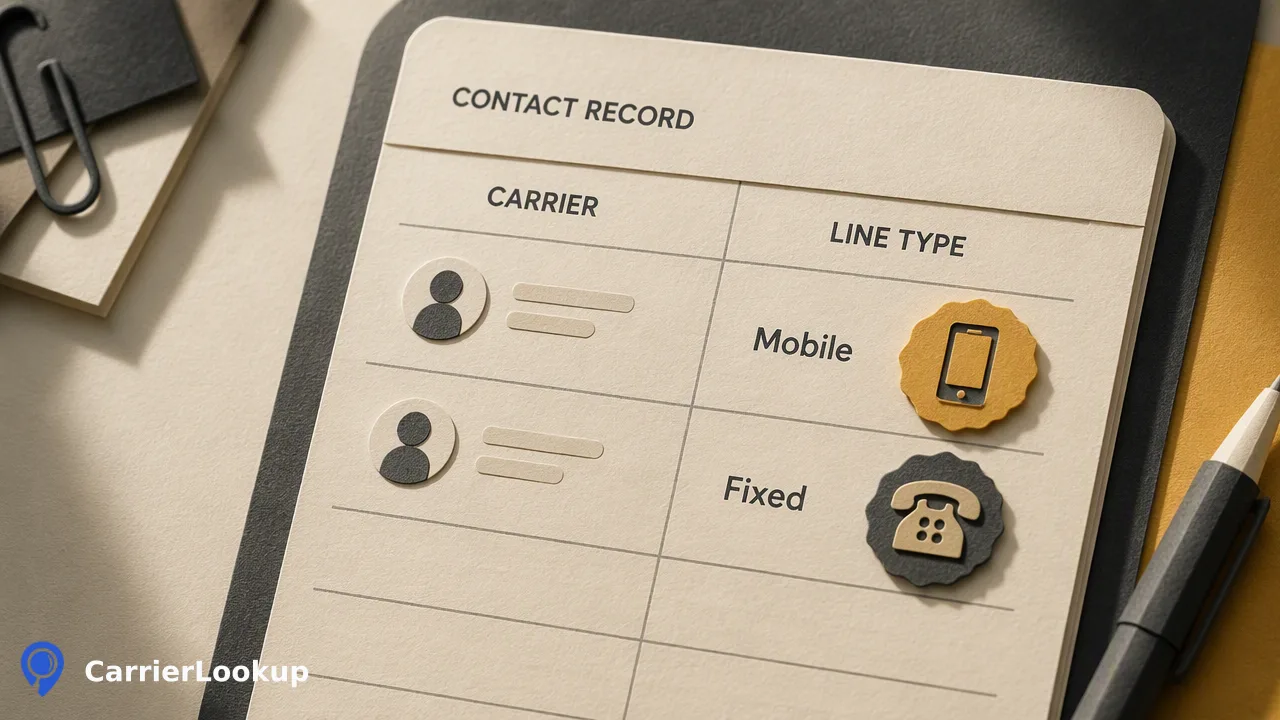
Integrating phone number validation and carrier lookup before triggering an OTP workflow helps organizations filter out invalid formats and unsuitable line types. This strategic pre-check informs routing decisions and conserves SMS budgets by identifying original network allocation and line type data before messaging occurs.
Integrating phone number validation before triggering an OTP workflow helps organizations filter out invalid formats and unsuitable line types, such as fixed landlines. This strategic pre-check informs routing decisions and conserves SMS budgets by identifying original network allocation data before any messaging occurs. By utilizing CarrierLookup through a REST API or web dashboard, teams can retrieve the original assigned carrier, line type, and allocation geography for a given phone number. Separating data validation from the messaging trigger helps reserve expensive OTP processes for numbers that align with the intended communication channel, supporting overall workflow efficiency and better resource allocation.
The Challenge of High-Volume OTP Workflows
Organizations managing high-volume user verification frequently encounter the challenge of wasted SMS spend when triggering One-Time Passwords (OTPs) to unsuitable phone numbers. Sending OTPs to invalid formats or fixed landlines incurs unnecessary costs and consumes valuable operational resources. Not all phone numbers are capable of receiving SMS messages, and treating every submitted number as a viable mobile endpoint leads to workflow inefficiencies. When teams rely solely on the OTP trigger to determine if a number is suitable, they absorb the cost of every failed attempt. Implementing a strategic pre-check helps teams review the submitted data before initiating the messaging phase. By separating the initial data assessment from the actual OTP dispatch, organizations can better manage their communication budgets and support smooth operation of their verification pipelines. This approach supports more informed decision-making when handling large batches of user contact information.
Validation as a Strategic Pre-Check
Phone number validation serves as a critical first step in the verification funnel, confirming that a number is well-formed without sending a message to the user. Filtering out invalid formats at the start of the workflow protects the SMS budget and streamlines subsequent processing stages. When teams integrate a validation step, they can quickly identify malformed entries and prompt users to correct their input immediately. This proactive approach reduces the volume of unsuitable numbers that reach the more expensive OTP stage. Validation acts as a foundational layer, providing teams with the necessary context to decide whether a number should proceed through the pipeline. By establishing this pre-check, organizations can systematically organize their contact records and apply appropriate routing logic based on the structural validity of the provided phone numbers, ultimately supporting a more cost-effective operational model.
Leveraging Carrier Data for Better Segmentation
Beyond basic format checks, incorporating carrier data provides valuable allocation context that helps teams organize and prioritize contact records. CarrierLookup returns the original assigned carrier, line type, and geographic allocation data for a phone number. Accessing line type data helps identify fixed lines that may not support SMS, allowing teams to route those numbers to alternative verification methods, such as voice calls, or flag them for review. The synchronous REST API endpoint, POST /api/v1/check, allows teams to retrieve this allocation context on a per-number basis during the onboarding flow. The resulting data includes the carrier, number_type, country_code, region, and city fields, which describe the number-allocation geography rather than a person's current location. Utilizing this original network allocation data supports more nuanced segmentation, enabling organizations to tailor their verification strategies based on the specific characteristics of the submitted phone numbers.
Building an Efficient Verification Pipeline
Constructing an optimized verification pipeline requires a systematic approach to processing phone numbers. The first step involves validating the format and retrieving the line type using CarrierLookup. For high-volume operations, teams can utilize the POST /api/v1/batch-check endpoint to process 1 to 100 identifiers synchronously in input order, or use the carrier_batch service type for asynchronous processing of 1,000 to 100,000 valid numbers from a single country. The second step uses the returned allocation context to route or prioritize the numbers. If the registered=true signal indicates allocation data was found, teams can evaluate the number_type to determine the next action. Finally, the workflow triggers the OTP only for candidates that align with the SMS channel requirements. This structured pipeline focuses operational resources on suitable numbers, supporting a streamlined and cost-conscious verification strategy.
Interpreting Carrier Lookup Signals
Understanding the signals returned by CarrierLookup is essential for integrating the data effectively into a verification workflow. The primary result provided is the original assigned carrier, which reflects the initial network allocation rather than the current network after number portability. When querying the API, a result of registered=true indicates that allocation data was successfully found for the submitted number. Similarly, in synchronous multi-number rows, an exists=false value simply means a normal result is absent, not a negative carrier conclusion. Any unavailable fields in the response are returned as empty strings. By correctly interpreting these allocation signals, teams can make informed routing decisions without overextending the meaning of the data beyond its documented scope.
FAQ
Why do organizations validate a number before sending an OTP?
Organizations validate phone numbers before sending an OTP to filter out invalid formats and unsuitable line types, such as fixed landlines. This pre-check helps conserve SMS budgets by preventing expensive messaging attempts to numbers that cannot receive them. By separating data validation from the messaging trigger, teams can inform their routing decisions and support a more cost-effective verification workflow.
How does line type data help in verification workflows?
Line type data helps teams identify the original allocation category of a phone number, such as whether it is a mobile or fixed line. This allocation context allows organizations to route fixed lines to alternative verification methods, like voice calls, rather than attempting to send an SMS. Utilizing line type signals from CarrierLookup supports better segmentation and resource prioritization within the verification pipeline.
Does carrier lookup confirm the current network after number portability?
No, CarrierLookup provides the original assigned carrier for a phone number. It does not return the current network after number portability has occurred. The service returns original network allocation, line type, and allocation geography fields, such as region and city. This data serves as allocation context to inform internal routing decisions and workflow segmentation, rather than providing real-time network status or current location.
What does a registered false result indicate in CarrierLookup?
A registered=false result is a normal indication that no allocation data was found for the submitted phone number. Teams should treat this as an absence of allocation context rather than a negative conclusion about the number itself. Unavailable fields in the synchronous response are simply returned as empty strings.