
Product guidance
Navigating International Phone Data: Why Prefix-Based Routing Fails
Learn why static prefix routing fails due to number portability and how international phone number validation provides accurate carrier allocation context.
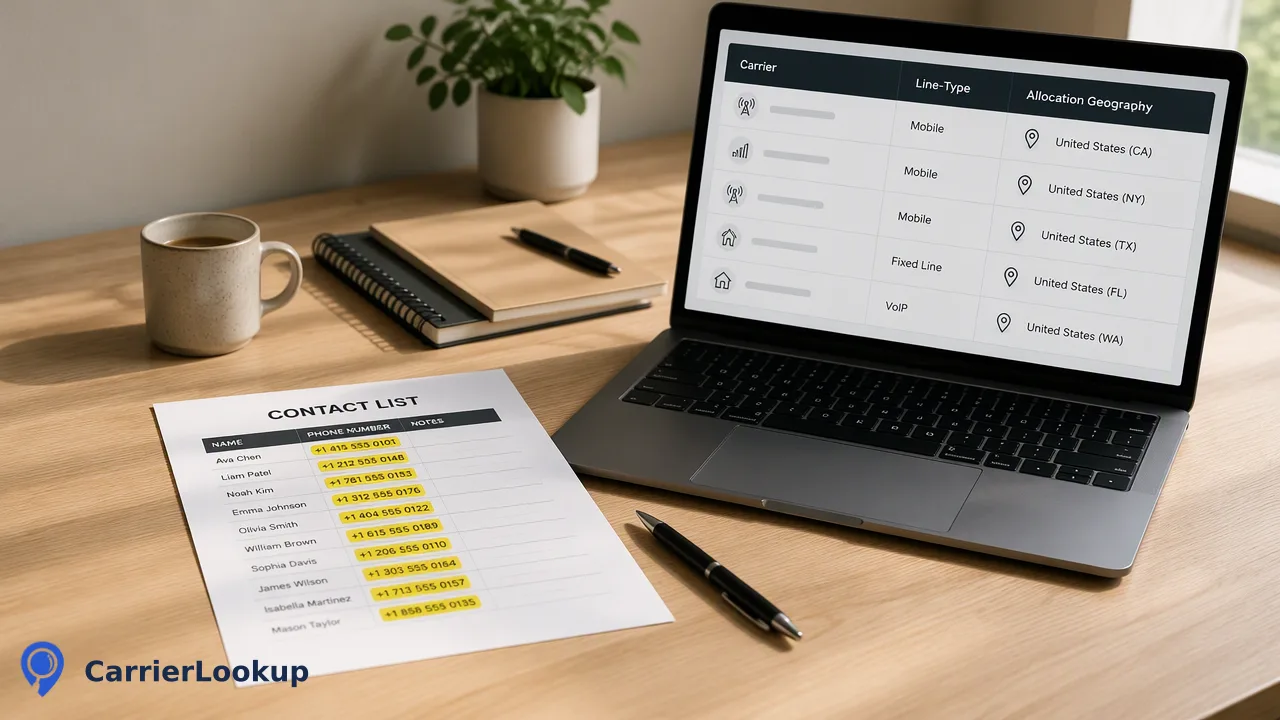
Relying on static dialing prefixes creates operational blind spots as number portability expands worldwide. Discover how international phone number validation provides allocation context to improve routing and CRM hygiene.
Prefix-based routing fails because global number portability allows subscribers to transfer phone numbers across carriers while retaining their original dialing sequences. Static prefix tables reflect historical network allocations rather than current carrier assignments. To maintain reliable operational workflows, organizations use international phone number validation to retrieve live allocation context, such as current carrier, line-type, and numbering geography. Rather than treating prefixes as permanent indicators of routing paths or subscriber location, teams evaluate structured metadata to support message routing, inform CRM segmentation, and prioritize manual review queues without assuming device reachability or identity.
The Fallacy of Static Prefix Routing
Telecommunications numbering plans historically assigned contiguous blocks of numbers to specific network operators and geographic exchange areas. In early telecommunications architectures, an area code and local prefix directly identified the terminating carrier and exchange switch. Today, regulatory mandates worldwide require mobile and fixed-line number portability, allowing subscribers to change service providers freely. When a subscriber ports their number, the relationship between the dialing prefix and the servicing network breaks. Systems relying on static database tables or prefix lists continue to direct traffic based on the initial allocation. This misalignment causes routing friction, misdirected queries, and inaccurate reporting. Because portability rules and adoption rates differ significantly across countries, static prefix databases experience rapid data decay. Maintaining dependable communication systems requires evaluating live carrier data rather than relying on historical range assignments.
Understanding Allocation Context Versus Device Status
Integrating carrier lookups into data pipelines requires a precise understanding of the returned signals. A carrier lookup returns available carrier, line-type, and allocation-geography metadata for supported phone numbers. These attributes describe how telecommunications systems categorize the line, not the active state of the user's handset. For example, geographic attributes such as region and city describe number-allocation geography rather than a device's physical location or GPS coordinates. A subscriber holding a number allocated to a specific metropolitan area may live elsewhere or roam internationally. Furthermore, when allocation fields return empty or indicate that no record was located, systems should treat this as an absence of allocation data rather than definitive proof of a disconnected line. Keeping allocation context distinct from device-level reachability prevents teams from making false assumptions during operational reviews.
Optimizing Operational Workflows with Line-Type Intelligence
In addition to identifying current network operators, international phone number validation separates line types, distinguishing mobile numbers from fixed lines, VoIP services, and toll-free ranges. Telecommunications channels operate under distinct transmission standards, making line-type awareness critical for messaging and voice operations. Organizations use line-type intelligence to streamline backend operations and optimize contact lists. For instance, voice-only landline numbers can be automatically excluded from SMS transmission pipelines, preventing delivery errors and conserving messaging budgets. Similarly, support operations can evaluate carrier and line-type metadata to sort customer contact queues, routing specialized accounts or complex inquiries to dedicated manual review teams. Line-type metadata provides structured context that informs internal business logic without requiring complex telecommunications infrastructure.
Best Practices for Global Data Consistency
Managing international communication pipelines requires combining format normalization with dynamic lookup workflows. Format checks alone, such as validating syntax or standardizing strings into the international E.164 format, establish structural validity but cannot reveal carrier changes or line classifications. E.164 formatting serves as the essential baseline, ensuring country codes, area codes, and subscriber numbers follow a consistent structure across borders. Once standardized, numbers should be evaluated against real-time carrier lookup services to obtain current allocation context. Teams can execute single synchronous API lookups at the point of customer data entry to capture carrier and line-type fields instantly. For existing contact databases, asynchronous batch processing enables teams to clean and enrich large customer registries systematically. This layered architecture keeps data stores synchronized with changing carrier assignments across international markets.
FAQ
Why do phone number prefixes fail to reflect the current network provider?
Number portability regulations across jurisdictions permit subscribers to switch service providers without altering their assigned phone numbers. Dialing prefixes indicate only which network operator received the original block allocation from regional telecommunication authorities. When a subscriber ports a number, prefix tables become obsolete. Querying live carrier allocation context provides the current carrier assignment necessary to maintain accurate routing workflows and customer data records.
Does a carrier lookup confirm whether a phone number is active or reachable?
A carrier lookup returns available carrier, line-type, and allocation-geography fields for supported phone records. It provides allocation context rather than real-time network connectivity, device reachability, or subscriber activity. A result indicating that allocation data is absent does not establish that a number is disconnected or invalid. Instead, the data serves as one operational input alongside other communication checks.
What is the difference between allocation geography and a device location?
Allocation geography identifies the administrative city, region, or numbering district originally tied to a telephone prefix by national regulatory plans. It does not reflect GPS coordinates, live roaming status, or the physical whereabouts of a user or device. Organizations use allocation geography to normalize regional records and support CRM hygiene rather than attempting to track real-time physical location.
Learn More
Choose the product information that fits the next step in your workflow.