
Product guidance
Static vs. Current Carrier Data: Why Your Routing Logic Needs Both
Learn why routing logic requires both static allocation data and current carrier lookup context to optimize phone-number workflows and list hygiene.
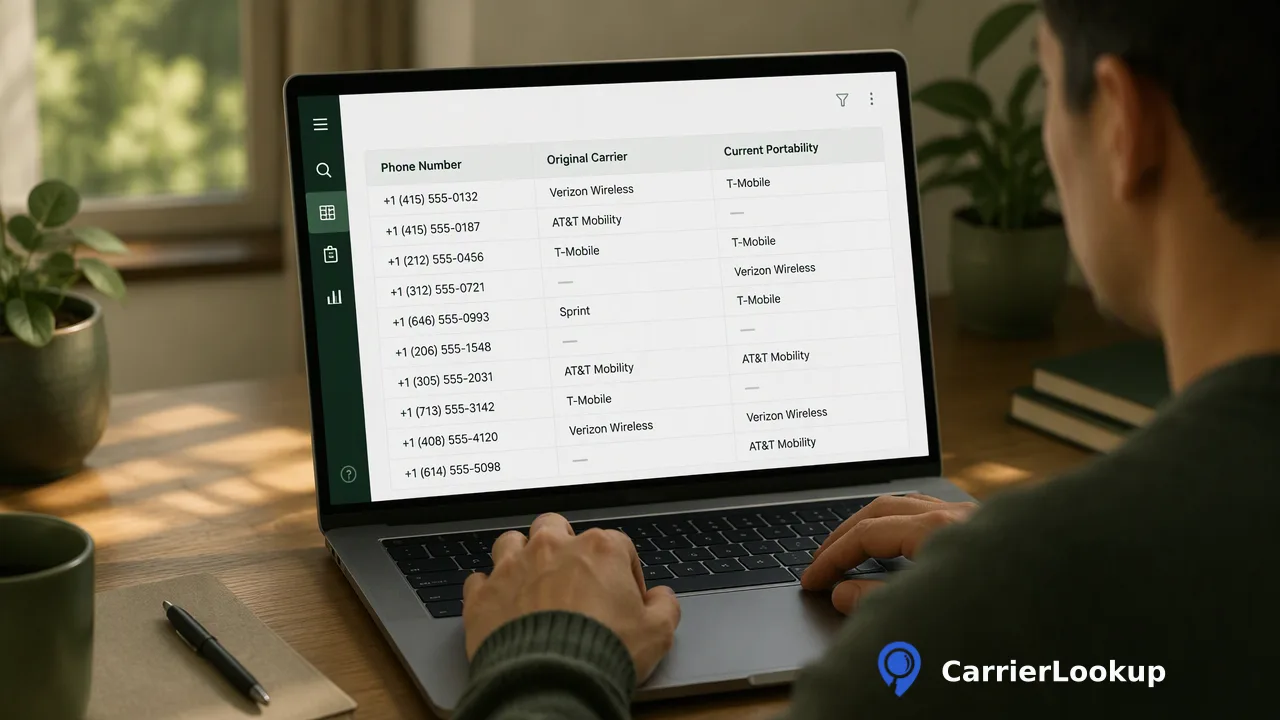
Explore the differences between static allocation data and current carrier lookups, and learn how to combine both for optimized phone-number routing and list hygiene.
Static carrier data provides the original network assignment based on numbering plans, which is highly efficient for bulk list hygiene and initial segmentation. However, because number portability allows users to switch providers while keeping their phone numbers, static data alone may not reflect the current serving network. A robust routing strategy uses static data for baseline operations while acknowledging the need for current carrier lookup context in high-stakes workflows. By understanding the distinction between original allocation and the live network, organizations can optimize their data operations, balance processing speed, and build more reliable phone-number workflows without overestimating the reachability of a given contact record.
The Role of Static Carrier Data in Modern Workflows
Organizations managing large contact databases often begin their data hygiene processes by identifying the original network assignment of a phone number. Static carrier data fulfills this requirement by referencing established numbering plans to determine where a number was initially allocated. This method is highly efficient for bulk list cleaning and initial validation because it does not require querying live network registries or tracking daily portability changes. Teams can process large volumes of records quickly, using the original allocation context to segment lists before applying more resource-intensive checks. For example, CarrierLookup provides this static context through a web dashboard, REST API, and MCP integrations. Using the carrier_batch service type, organizations can process asynchronous bulk tasks containing 1,000 to 100,000 valid numbers from a single country, generating a downloadable result file. This baseline data helps teams organize records, filter out obvious anomalies, and prioritize downstream workflows, making static allocation an essential first step in comprehensive data management strategies.
Understanding the Impact of Number Portability
While original allocation data is valuable for initial segmentation, it does not account for changes that occur after a number is issued. Number portability allows subscribers to retain their phone numbers when switching to a different network provider. Consequently, the network that originally issued the number may no longer be the network actively serving it today. Because static data relies on historical numbering plans, it reflects the network of record at the time of issuance rather than the current serving network. A current carrier lookup is necessary to identify the live network after a number has been ported. It is critical for technical teams to recognize this distinction; relying solely on static data for precise routing can lead to inefficiencies if a significant portion of the database has migrated to new providers. Understanding that static data provides historical context rather than real-time network status helps organizations set accurate expectations for their routing logic and avoid misattributing network capabilities to ported numbers.
Building a Hybrid Routing Strategy
To optimize both processing speed and operational costs, organizations can implement a hybrid approach that leverages both static allocation data and current network context. In this model, teams use static lookups for the majority of their traffic, applying it to bulk list hygiene and broad segmentation tasks. This allows systems to quickly categorize records based on their original network assignment without unnecessary overhead. For high-stakes segments where precise network routing is critical, organizations can then apply a current carrier lookup to determine the live serving network. By reserving more granular, live portability checks for specific workflows, teams balance efficiency with accuracy. For instance, a synchronous check using the POST /api/v1/batch-check endpoint can handle 1 to 100 identifiers in input order, returning static allocation fields for immediate logic branching. This tiered strategy supports intelligent routing logic, ensuring that resources are allocated effectively while maintaining the necessary context for complex phone-number operations across diverse global markets.
Best Practices for Data Enrichment
When integrating static carrier data into CRM systems or routing logic, teams should utilize all available allocation fields to maximize the value of the enrichment process. CarrierLookup returns synchronous results that can include carrier, number_type, country_code, region, and city. If a specific field is unavailable for a given number, it is returned as an empty string rather than an error. A common best practice is using the number_type field to sort contact lists and prioritize manual review processes based on line classification. Additionally, it is crucial to interpret geographic data correctly. The region and city fields describe the number-allocation geography—the area where the number was originally issued—rather than a person's current location, GPS coordinates, or device location. Furthermore, a synchronous multi-number row uses exists to indicate whether it has a normal result.
FAQ
What is the difference between original allocation and current carrier?
Original allocation refers to static carrier data, which identifies the network to which a phone number was initially assigned based on historical numbering plans. In contrast, a current carrier lookup identifies the live network actively serving the number today. Because of number portability, subscribers can switch providers, meaning the original assigned carrier often differs from the current serving network.
Does a carrier lookup confirm if a number is reachable?
No, a static carrier lookup does not establish reachability by call, SMS, or messaging app. It only provides the original assigned carrier and allocation context based on numbering plans. Furthermore, a result indicating that no allocation data was found—such as registered=false or exists=false—is a normal response.
How should teams use allocation geography fields?
Teams should use allocation geography fields, such as region and city, to understand the historical origin of a phone number based on numbering plans. These fields describe where the number was initially issued. They do not represent a person's current physical location, GPS position, or device location. This data supports broad list segmentation and regional organization rather than real-time location tracking.
How does bulk processing handle static carrier lookups?
Bulk processing allows organizations to evaluate large lists of phone numbers efficiently. Using the carrier_batch service type, teams can submit asynchronous tasks containing 1,000 to 100,000 valid numbers from a single country. Once processed, the system provides a downloadable result file containing the original assigned carrier, line-type signals, and allocation geography for each number, supporting large-scale data hygiene workflows.