
Product guidance
Why Assigned Carrier Data Isn't Enough: The Case for Real-Time Portability Lookups
Understand the difference between original assigned carrier data and real-time carrier portability lookups for accurate phone number segmentation workflows.
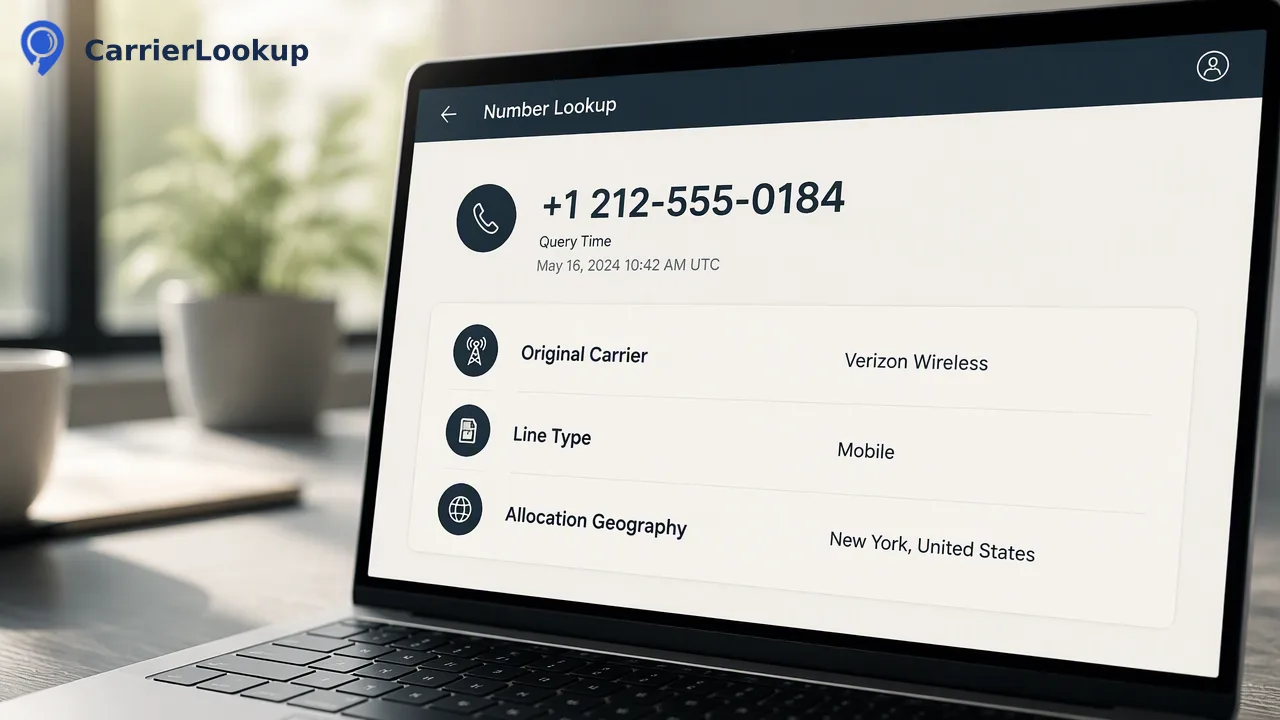
Understand the operational differences between original assigned carrier data and real-time portability lookups, and learn how to integrate allocation context into data segmentation workflows.
Standard carrier data based on numbering plans identifies the network to which a phone number was originally allocated by regulatory authorities, rather than the network currently serving it. Because mobile number portability (MNP) permits subscribers to switch service providers while retaining their original phone numbers, static allocation databases do not reflect real-time network changes. Consequently, organizations evaluating phone-number workflows must distinguish between original assigned carrier data and real-time carrier portability lookups. While real-time lookups are necessary for precise routing, original assigned carrier data provides valuable allocation context, such as line type and geography. Teams use this static context to organize CRM records, segment contact lists, and inform manual review processes, recognizing that it does not track real-time portability changes or establish reachability.
The Limitation of Static Numbering Plans
Numbering authorities manage telecommunications infrastructure by allocating specific blocks of phone numbers to designated network providers at the time of issuance. This initial distribution creates a static numbering plan database that records the original assigned carrier for any given range. When organizations query these databases, the primary result is the original assigned carrier, not the current network after number portability. Because this allocation data is static, it remains unchanged even when a subscriber subsequently moves their number to a different network provider. Relying exclusively on static numbering plans for dynamic operational decisions introduces inaccuracies, as the original assignment does not update to reflect the current serving network. Consequently, teams must treat original assigned carrier data as foundational allocation context rather than a definitive indicator of a number's present network status.
Understanding Mobile Number Portability
Mobile number portability is the regulatory mechanism that permits subscribers to retain their existing phone numbers when switching between different network service providers. This capability fundamentally alters how organizations must approach telecommunications data management. Before the widespread adoption of mobile number portability, the original assigned carrier was synonymous with the current serving network. Today, a number originally allocated to one provider may be serviced by an entirely different network. Because static databases only record the initial allocation, they become obsolete for workflows that require the exact current network. Organizations that fail to account for mobile number portability will encounter discrepancies between their CRM records and the actual network landscape. Understanding this distinction is critical for teams deciding when to rely on static allocation context and when a workflow necessitates real-time carrier portability lookups.
Operational Risks of Outdated Carrier Data
Relying on outdated carrier information for critical routing decisions introduces significant operational risks and inefficiencies. When systems attempt to route communications based solely on the original assigned carrier, they fail to account for numbers that have been ported to new networks. This discrepancy can lead to routing errors and misaligned operational workflows. To mitigate these risks, organizations must properly scope the role of static carrier data within their systems. Carrier data provides allocation context, such as line type and geography, which helps teams organize and segment phone records for internal review. It should be used exclusively for segmentation and review context rather than as a guarantee of reachability. By treating static data as an organizational input rather than a routing directive, teams maintain accurate operational expectations.
Integrating Carrier Allocation Context
Organizations can integrate original assigned carrier data into their workflows using the CarrierLookup REST API. For immediate data enrichment, the POST /api/v1/check endpoint performs an API-key single check, while the POST /api/v1/batch-check endpoint handles 1 to 100 identifiers synchronously in input order. These synchronous results can include carrier, number_type, country_code, region, and city allocation fields; any unavailable fields are returned as empty strings. For larger datasets, bulk carrier tasks use the service type carrier_batch and support processing 1,000 to 100,000 valid numbers from one country before providing an asynchronous download. By implementing these endpoints, teams can systematically append allocation context to their CRM records. This structured approach helps internal systems maintain the necessary line-type and geographical allocation metadata to support manual review and data segmentation workflows effectively.
Interpreting Allocation Geography and Results
When processing carrier data, teams must accurately interpret the returned fields and status indicators. The region and city fields describe the number-allocation geography rather than a person or device's current physical location. Furthermore, the API utilizes specific boolean flags to indicate data availability. A result of registered=true means that allocation data was successfully found in the database. Similarly, a synchronous multi-number row uses the exists field to indicate whether it has a normal result, and exists=false is not a negative carrier conclusion. Understanding these constraints helps teams avoid misinterpreting empty allocation fields or false registration flags as definitive proof of a number's operational status or validity.
Structuring Workflows Around Static Data
To maximize the utility of original assigned carrier data, organizations should structure their workflows to leverage allocation context without overextending its capabilities. Teams can utilize the number_type and carrier fields to organize contact lists, prioritize manual review queues, and segment records based on the initial issuing authority. Because CarrierLookup results are based on original allocation and do not track real-time portability changes, this data serves best as an initial filtering layer. Workflows that require absolute certainty regarding the current serving network for routing purposes must incorporate separate real-time portability lookups. By clearly defining the boundaries of static data, organizations can optimize their API usage, applying synchronous checks for immediate CRM enrichment and asynchronous bulk processing for large-scale database maintenance, all while maintaining realistic expectations about the data's scope.
FAQ
Why is carrier data sometimes different from the current network?
Carrier data often reflects the original assigned carrier to which a regulatory numbering authority initially allocated the phone number range. Because mobile number portability permits subscribers to switch service providers while keeping their phone numbers, the current serving network may differ from the original allocation.
Does a carrier lookup confirm if a number is reachable?
No, a carrier lookup provides original allocation context, such as the assigned network, line type, and allocation geography. Teams use this static allocation data to organize and segment phone records for internal review workflows, rather than as a guarantee that a number is currently active or capable of receiving communications.
How do teams integrate synchronous and bulk carrier checks?
Organizations integrate carrier checks using the CarrierLookup REST API. The POST /api/v1/check endpoint processes a single identifier, while POST /api/v1/batch-check handles 1 to 100 identifiers synchronously in input order. For larger datasets, teams utilize the carrier_batch service type, which supports processing 1,000 to 100,000 valid phone numbers from a single country asynchronously before providing a downloadable result file.
What does a false registration result mean in a carrier check?
In a carrier check, a registered=false result simply means that no original allocation data was found for that specific phone number in the database. Similarly, in synchronous multi-number rows, an exists=false result indicates a lack of data rather than a negative conclusion about the number's operational status.
Does allocation geography indicate a device's physical location?
No, the region and city fields returned in a carrier lookup describe the specific number-allocation geography designated by the numbering authority at the time of issuance. This data represents where the number block was originally issued for administrative purposes.